Buy fotoworkshops.eu ?
We are moving the project
fotoworkshops.eu .
Are you interested in purchasing the domain
fotoworkshops.eu ?
domain@kv-gmbh.de · 0541-91531010
Buy fotoworkshops.eu ?
What is the difference between paper chromatography and gas chromatography?
Paper chromatography involves the separation of compounds based on their affinity to the stationary phase (paper), while gas chromatography separates compounds based on their volatility and interaction with the mobile phase (gas). In paper chromatography, the mobile phase is a liquid solvent, whereas in gas chromatography, the mobile phase is a gas. Gas chromatography is typically more sensitive and provides better resolution compared to paper chromatography, making it more suitable for analyzing complex mixtures of compounds. **
What happens during chromatography?
During chromatography, a mixture of substances is separated into its individual components based on their different affinities for a stationary phase and a mobile phase. The sample is applied to the stationary phase, and the mobile phase is passed through the stationary phase. As the mobile phase moves through the stationary phase, the components of the mixture will interact differently with the stationary phase, causing them to separate and move at different rates. This results in the components being eluted from the column at different times, allowing for their individual identification and quantification. **

Similar search terms for Chromatography
Top-Angebote
Products related to Chromatography:
-
Uplift Essentials Auto Focus Digital Microscope 500x Magnification 2MP Portable Lens High Yield Jewelry & Watch Repair Hub Auto Focus Digital Microscope 500x Magnification 2MP Portable Lens High Yield Jewelry & Watch Repair HubAchieve visual optimization with the Auto Focus Digital Microscope. Specifically engineered for imaging transparency, this highperformance optical tool acts as a vital tool for inspection efficiency, neutralizing the limitations of traditional...129,97 $*Shipping: 0,00 $Secure redirect to the provider
-
Asus AUSDOM AF640 1080P Webcam Auto Focus with Noise Cancelling Microphone Super Wide Angle LensAUSDOM AF640 1080P Webcam Auto Focus with Noise Cancelling Microphone Super Wide Angle Lens Never Miss Any Details: Full HD 1080P with max resolution up to 1920 x 1080 pixels, easy to make HD video calls or record video. See More Than Expect: Super HD wide-angle lens achieves a wider field of view and wider-range coverage Noise Reduction Mic: Filter out external background noise, and make you heard very clearly. Fast and Accurate Autofocus: Make the camera will automatically stay focused on your face even if you move around. Wide Compatibility: Windows XP, Windows 7, Windows 8, Windows 10, Android V5.0 or updated version, Mac OS 10.6 or updated version. Specifications: F/No.: 2.0 View Angle: Horizontal 90° MIC.: Built-in S.P.L: -36dB Directivity: Omni-directional Sensor: 1/2.7” COMS Image Sensor Interface: USB 2.0 (Free Driver) Power Consumption: ≤260mAh Support OS (UVC): Windows XP/7/8/10 or updated version, Mac OS 10.6 or updated version, Chrome OSTM, Android v5.0 or above Photo Resolution: 1920*1080 Video Resolution (Video mode: YUY2): Max Resolution: 1980*1080 30fps Min. Resolution: 320*240 30fps Default: 640*480 30fps Video Resolution (Video mode: MJPG): Max Resolution: 2048*1536 30fps Min. Resolution: 160*120 30fps Default: 1280*720 30fps Photo Format: JPG Operating Temp.: -10°C-50°C49,99 £*Shipping: 0,00 £Secure redirect to the provider




-
Is there a difference between chromatography and thin layer chromatography of amino acids?
Yes, there is a difference between chromatography and thin layer chromatography (TLC) of amino acids. Chromatography is a general term for a technique used to separate and analyze mixtures, while TLC is a specific type of chromatography that uses a thin layer of adsorbent material on a flat support to separate compounds. In the case of amino acids, both techniques can be used to separate and analyze the different amino acids present in a mixture, but TLC is a quicker and simpler method that is often used for preliminary analysis or for educational purposes. Traditional chromatography methods, such as high-performance liquid chromatography (HPLC), may offer higher resolution and sensitivity for more detailed analysis of amino acids. **
-
What is paper chromatography in chemistry?
Paper chromatography is a technique used in chemistry to separate and analyze mixtures of substances. It involves placing a small spot of the mixture on a strip of paper and then allowing a solvent to move up the paper through capillary action. As the solvent moves, it carries the different components of the mixture at different rates, causing them to separate based on their affinity for the paper and the solvent. This technique is commonly used in the identification of unknown substances and in the analysis of complex mixtures. **
-
What is the principle of chromatography and can you give an example of different chromatography methods?
Chromatography is a technique used to separate and analyze complex mixtures based on the differential interactions between the components of the mixture and a stationary phase. The principle of chromatography involves the sample being dissolved in a mobile phase and passed through a stationary phase, where the components of the sample interact differently with the stationary phase, causing them to separate. There are several types of chromatography methods, including gas chromatography (GC), liquid chromatography (LC), and high-performance liquid chromatography (HPLC). In gas chromatography, the mobile phase is a gas, while in liquid chromatography, the mobile phase is a liquid. High-performance liquid chromatography is a more advanced form of liquid chromatography that uses high pressure to separate components more efficiently. **
-
What is the principle of chromatography and can you provide an example of different chromatography methods?
Chromatography is a technique used to separate and analyze complex mixtures based on the differential interactions between the components of the mixture and a stationary phase. The principle of chromatography involves the sample being dissolved in a mobile phase and passed through a stationary phase. The components of the sample interact differently with the stationary phase, causing them to separate based on their affinity for the stationary phase. There are various types of chromatography methods, including gas chromatography (GC), liquid chromatography (LC), and high-performance liquid chromatography (HPLC). In gas chromatography, the mobile phase is a gas, while in liquid chromatography, the mobile phase is a liquid. HPLC is a more advanced form of liquid chromatography that uses high pressure to separate components more efficiently. **


How can one explain chromatography in kindergarten?
Chromatography can be explained in kindergarten by using simple language and visuals. One way to explain it is by comparing it to how colors separate when they mix in water. Children can be shown how different colors in markers or food coloring separate and spread out on a paper strip when placed in water. This can help them understand that chromatography is a process that separates different colors or substances based on how fast they move through a material. Overall, using hands-on activities and simple explanations can make chromatography understandable and engaging for kindergarteners. **
What is chromatography and how does it work?
Chromatography is a technique used to separate and analyze mixtures of substances based on their different properties. It works by passing a mixture through a stationary phase, which can be a solid or liquid, and a mobile phase, which carries the mixture through the stationary phase. The components of the mixture interact differently with the stationary phase, causing them to move at different rates and separate from each other. This allows for the identification and quantification of the individual components in the mixture. **
Top-Angebote
Products related to Chromatography:
-
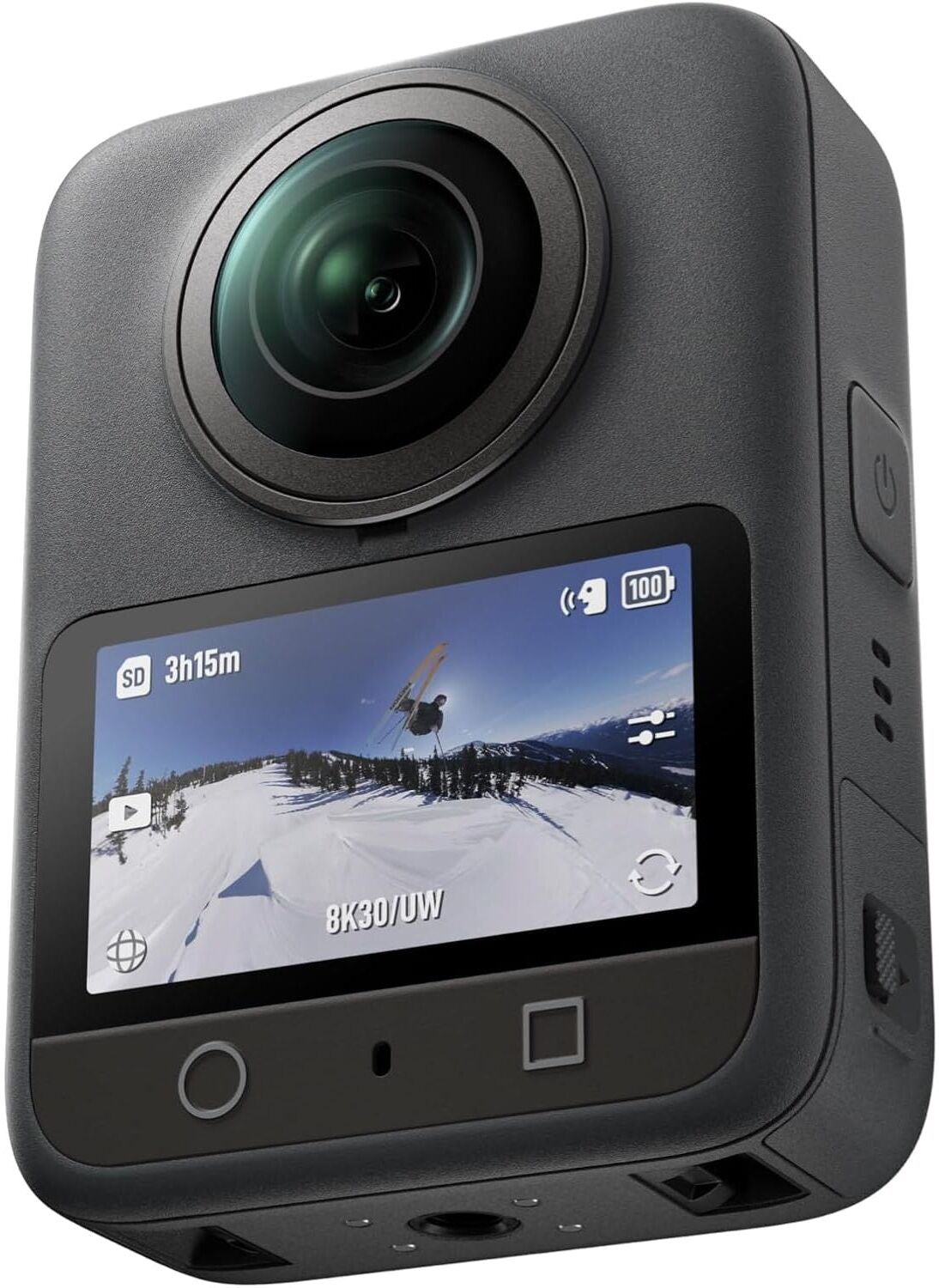
Eclat Tech Ltd DJI Osmo Action 360 Standard Combo Action Camera – 360° Capture, Dual-Lens, Stabilised VideoThe DJI Osmo Action 360 Standard Combo is a versatile action camera designed to capture immersive 360° footage with stunning clarity. Featuring dual-lens technology and advanced stabilisation, it allows you to record every angle of your adventure in smooth, cinematic detail. Built for durability and ease of use, it’s perfect for content creators, travellers, and outdoor enthusiasts who want to elevate their video experience. Key Features 360° dual-lens capture for fully immersive video and photos High-resolution recording for sharp, detailed footage Advanced stabilisation for smooth, shake-free videos Rugged, waterproof design for outdoor and action use Dual touchscreen displays for easy framing and control Wide field of view for dynamic and creative shots Intelligent shooting modes for creative flexibility Wi-Fi and Bluetooth connectivity for quick sharing Long-lasting battery for extended recording sessions Compact and portable design for on-the-go use Benefits The DJI Osmo Action 360 allows you to capture every moment from all angles, eliminating the need to worry about framing. Its stabilisation ensures smooth footage even in high-motion environments, while the durable build makes it suitable for extreme conditions. With easy controls and wireless connectivity, it simplifies content creation and sharing. Whether you’re filming adventures or creating social media content, it delivers immersive and professional-quality results. Specifications Specification Details Model DJI Osmo Action 360 EAN 6937224110502 Camera Type 360° Action Camera Lens Type Dual Lens Video Resolution High-resolution (varies by mode)* Stabilisation Advanced Electronic Stabilisation Display Dual Touchscreens Connectivity Wi-Fi, Bluetooth Waterproof Yes Battery Rechargeable Lithium-Ion Colour Black *Exact resolution depends on shooting mode and settings. What you’ll receive DJI Osmo Action 360 Camera Battery Mounting Frame Adhesive Mount USB-C Charging Cable Quick Release Adapter User Documentation399,00 £*Shipping: 0,00 £Secure redirect to the provider
-
NIVEA SUN set for sun exposureNIVEA SUN, 0 , After-Sun Care for Women, Everything for beautiful-looking skin all in one package. The NIVEA SUN beauty gift set contains not one but several products to help you create or enrich your daily beauty routine and make you or your loved ones happy to receive it as a gift. The set contains: NIVEA SUN Protect & Dry Touch invisible sun spray SPF 50 200 ml NIVEA SUN After Sun moisturising after sun lotion with aloe vera 400 ml Characteristics: for a comprehensive skin care routine protects skin against UVA and UVB radiation gives skin the hydration it needs provides deep nourishment to sun-stressed skin a set at a favourable price How to use: Use every product from the cosmetic set according to the instructions.20,70 £*Shipping: 3,99 £Secure redirect to the provider
-
Uplift Essentials Auto Focus Digital Microscope 500x Magnification 2MP Portable Lens High Yield Jewelry & Watch Repair Hub Auto Focus Digital Microscope 500x Magnification 2MP Portable Lens High Yield Jewelry & Watch Repair HubAchieve visual optimization with the Auto Focus Digital Microscope. Specifically engineered for imaging transparency, this highperformance optical tool acts as a vital tool for inspection efficiency, neutralizing the limitations of traditional...129,97 $*Shipping: 0,00 $Secure redirect to the provider
-
What is the difference between paper chromatography and gas chromatography?
Paper chromatography involves the separation of compounds based on their affinity to the stationary phase (paper), while gas chromatography separates compounds based on their volatility and interaction with the mobile phase (gas). In paper chromatography, the mobile phase is a liquid solvent, whereas in gas chromatography, the mobile phase is a gas. Gas chromatography is typically more sensitive and provides better resolution compared to paper chromatography, making it more suitable for analyzing complex mixtures of compounds. **
-
What happens during chromatography?
During chromatography, a mixture of substances is separated into its individual components based on their different affinities for a stationary phase and a mobile phase. The sample is applied to the stationary phase, and the mobile phase is passed through the stationary phase. As the mobile phase moves through the stationary phase, the components of the mixture will interact differently with the stationary phase, causing them to separate and move at different rates. This results in the components being eluted from the column at different times, allowing for their individual identification and quantification. **
-
Is there a difference between chromatography and thin layer chromatography of amino acids?
Yes, there is a difference between chromatography and thin layer chromatography (TLC) of amino acids. Chromatography is a general term for a technique used to separate and analyze mixtures, while TLC is a specific type of chromatography that uses a thin layer of adsorbent material on a flat support to separate compounds. In the case of amino acids, both techniques can be used to separate and analyze the different amino acids present in a mixture, but TLC is a quicker and simpler method that is often used for preliminary analysis or for educational purposes. Traditional chromatography methods, such as high-performance liquid chromatography (HPLC), may offer higher resolution and sensitivity for more detailed analysis of amino acids. **
-
What is paper chromatography in chemistry?
Paper chromatography is a technique used in chemistry to separate and analyze mixtures of substances. It involves placing a small spot of the mixture on a strip of paper and then allowing a solvent to move up the paper through capillary action. As the solvent moves, it carries the different components of the mixture at different rates, causing them to separate based on their affinity for the paper and the solvent. This technique is commonly used in the identification of unknown substances and in the analysis of complex mixtures. **
Similar search terms for Chromatography
-
Asus AUSDOM AF640 1080P Webcam Auto Focus with Noise Cancelling Microphone Super Wide Angle LensAUSDOM AF640 1080P Webcam Auto Focus with Noise Cancelling Microphone Super Wide Angle Lens Never Miss Any Details: Full HD 1080P with max resolution up to 1920 x 1080 pixels, easy to make HD video calls or record video. See More Than Expect: Super HD wide-angle lens achieves a wider field of view and wider-range coverage Noise Reduction Mic: Filter out external background noise, and make you heard very clearly. Fast and Accurate Autofocus: Make the camera will automatically stay focused on your face even if you move around. Wide Compatibility: Windows XP, Windows 7, Windows 8, Windows 10, Android V5.0 or updated version, Mac OS 10.6 or updated version. Specifications: F/No.: 2.0 View Angle: Horizontal 90° MIC.: Built-in S.P.L: -36dB Directivity: Omni-directional Sensor: 1/2.7” COMS Image Sensor Interface: USB 2.0 (Free Driver) Power Consumption: ≤260mAh Support OS (UVC): Windows XP/7/8/10 or updated version, Mac OS 10.6 or updated version, Chrome OSTM, Android v5.0 or above Photo Resolution: 1920*1080 Video Resolution (Video mode: YUY2): Max Resolution: 1980*1080 30fps Min. Resolution: 320*240 30fps Default: 640*480 30fps Video Resolution (Video mode: MJPG): Max Resolution: 2048*1536 30fps Min. Resolution: 160*120 30fps Default: 1280*720 30fps Photo Format: JPG Operating Temp.: -10°C-50°C49,99 £*Shipping: 0,00 £Secure redirect to the provider
-
Medavita Solarich Travel Set travel set for sun exposureMedavita Solarich Travel Set, 3 pc, After-Sun Care for Women, The set contains: Medavita Solarich Hair&Body; Restructuring After-Sun Shower Gel shower gel for body and hair 55 ml Medavita Solarich Intensive Restructuring After-Sun Hair Mask hydrating hair mask 50 ml Medavita Solarich Sunshine Summer Hair&Body; Oil protective oil for body and hair 50 ml Characteristics: washes out any remnants of salt and chlorine puts hair right after it has been in salty or chlorinated water intensifies and prolongs your tan gives a feeling of freshness hydrates the skin20,91 £*Shipping: 3,99 £Secure redirect to the provider
-
A-Street Prints Perspective Mustard Abstract Geometric WallpaperWith a mustard, grey and cream palette, this abstract geometric print has an inviting feel. Raised inks add a textural effect to its distressed design. Perspective is an unpasted, non woven wallpaper.137,49 $*Shipping: 0,00 $Secure redirect to the provider
-
What is the principle of chromatography and can you give an example of different chromatography methods?
Chromatography is a technique used to separate and analyze complex mixtures based on the differential interactions between the components of the mixture and a stationary phase. The principle of chromatography involves the sample being dissolved in a mobile phase and passed through a stationary phase, where the components of the sample interact differently with the stationary phase, causing them to separate. There are several types of chromatography methods, including gas chromatography (GC), liquid chromatography (LC), and high-performance liquid chromatography (HPLC). In gas chromatography, the mobile phase is a gas, while in liquid chromatography, the mobile phase is a liquid. High-performance liquid chromatography is a more advanced form of liquid chromatography that uses high pressure to separate components more efficiently. **
-
What is the principle of chromatography and can you provide an example of different chromatography methods?
Chromatography is a technique used to separate and analyze complex mixtures based on the differential interactions between the components of the mixture and a stationary phase. The principle of chromatography involves the sample being dissolved in a mobile phase and passed through a stationary phase. The components of the sample interact differently with the stationary phase, causing them to separate based on their affinity for the stationary phase. There are various types of chromatography methods, including gas chromatography (GC), liquid chromatography (LC), and high-performance liquid chromatography (HPLC). In gas chromatography, the mobile phase is a gas, while in liquid chromatography, the mobile phase is a liquid. HPLC is a more advanced form of liquid chromatography that uses high pressure to separate components more efficiently. **
-
How can one explain chromatography in kindergarten?
Chromatography can be explained in kindergarten by using simple language and visuals. One way to explain it is by comparing it to how colors separate when they mix in water. Children can be shown how different colors in markers or food coloring separate and spread out on a paper strip when placed in water. This can help them understand that chromatography is a process that separates different colors or substances based on how fast they move through a material. Overall, using hands-on activities and simple explanations can make chromatography understandable and engaging for kindergarteners. **
-
What is chromatography and how does it work?
Chromatography is a technique used to separate and analyze mixtures of substances based on their different properties. It works by passing a mixture through a stationary phase, which can be a solid or liquid, and a mobile phase, which carries the mixture through the stationary phase. The components of the mixture interact differently with the stationary phase, causing them to move at different rates and separate from each other. This allows for the identification and quantification of the individual components in the mixture. **
* All prices are inclusive of VAT and, if applicable, plus shipping costs. The offer information is based on the details provided by the respective shop and is updated through automated processes. Real-time updates do not occur, so deviations can occur in individual cases. ** Note: Parts of this content were created by AI.