Buy fotoworkshops.eu ?
We are moving the project
fotoworkshops.eu .
Are you interested in purchasing the domain
fotoworkshops.eu ?
domain@kv-gmbh.de · 0541-91531010
Buy fotoworkshops.eu ?
How can one get colleges or universities to buy one's own nonfiction books?
One way to get colleges or universities to buy your nonfiction books is to establish yourself as an expert in your field through speaking engagements, articles, and other forms of public recognition. This can help build your credibility and make your books more appealing to academic institutions. Additionally, reaching out directly to professors, department heads, or librarians at colleges and universities and offering to provide copies of your book for review or consideration for course adoption can also be effective. Finally, working with a literary agent or publishing company that specializes in academic or nonfiction books can help you navigate the process of getting your books into college and university libraries and curriculums. **
What lighting is ideal for a workshop?
The ideal lighting for a workshop is bright, even, and consistent. This can be achieved with overhead LED lights or fluorescent fixtures to provide ample illumination for detailed tasks. It's also important to have adjustable task lighting for specific work areas, such as desk lamps or portable work lights. Additionally, natural light from windows or skylights can help to reduce eye strain and create a more comfortable working environment. **


Similar search terms for Nonfiction
Top-Angebote
Products related to Nonfiction:
-
Nonfiction Phonics Readers SET 1: Short Vowels, Blends & MoreGive your child the tools to become a successful reader with this big collection of titles that target must-know concepts: short vowels, blends, plurals, and more. Each title features clear photos, just-right decodable text, and lively real-world...21,59 $*Shipping: 0,00 $Secure redirect to the provider
-
Nonfiction Phonics Readers SET 3: R-Control, Variant Vowels & MoreReinforce must-know phonics concepts with this cutting-edge series of nonfiction books! Each title features simple decodable text paired with clear, colorful photos to maximize learning and fun. From birds to birthdays, fast cars to big sharks―all...21,59 $*Shipping: 0,00 $Secure redirect to the provider
-
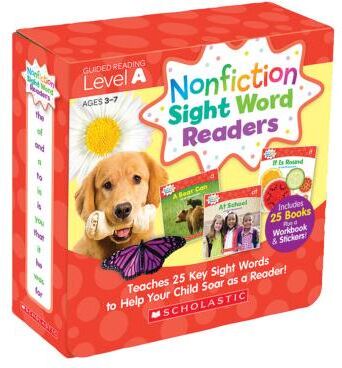
Scholastic Teaching Resources Nonfiction Sight Word Readers Parent Pack Level AParents can set the stage for their child to soar with these just-right books that teach the first 100 Fry sight words! Each box incParents can set the stage for their child to soar with these just-right books that teach the first 100 Fry sight...23,99 $*Shipping: 0,00 $Secure redirect to the provider
-
Allen and Unwin NeuroTribes: Winner of the Samuel Johnson Prize for NonfictionWhat is autism: a devastating developmental condition, a lifelong disability, or a naturally occurring form of cognitive difference akin to certain forms of genius? In truth, it is all of these things and more - and the future of our society depends on our understanding it. Following on from his groundbreaking article 'The Geek Syndrome', Wired reporter Steve Silberman unearths the secret history of autism, long suppressed by the same clinicians who became famous for discovering it, and finds surprising answers to the crucial question of why the number of diagnoses has soared in recent years. Going back to the earliest autism research and chronicling the brave and lonely journey of autistic people and their families through the decades, Silberman provides long-sought solutions to the autism puzzle while casting light on the growing movement of 'neurodiversity' and mapping out a path towards a more humane world for people with learning differences.7,95 £*Shipping: 2,99 £Secure redirect to the provider



-
Why won't the lens of Nikon D3000 focus?
There could be several reasons why the lens of a Nikon D3000 won't focus. It could be due to a dirty or smudged lens, a malfunctioning autofocus system, or a problem with the camera's settings. Additionally, the lens may not be properly attached to the camera body, or there could be a mechanical issue with the lens itself. It's important to troubleshoot and eliminate these potential issues to determine the exact cause of the focusing problem. **
-
Why is the lens focus ring not turning?
The lens focus ring may not be turning due to a mechanical issue such as a jammed or broken mechanism within the lens. It could also be due to a software issue, such as the camera not being properly connected to the lens or a malfunction in the autofocus system. Additionally, the lens may be in manual focus mode, which would prevent the focus ring from turning when using autofocus. It's important to troubleshoot the issue by checking the camera and lens settings, as well as inspecting the physical condition of the lens for any visible damage. If the issue persists, it may be necessary to seek professional repair or replacement of the lens. **
-
How to focus a manual lens on a gimbal?
To focus a manual lens on a gimbal, you will need to adjust the focus ring on the lens itself. Start by setting your camera to manual focus mode. Use the gimbal's controls to stabilize the camera and frame your shot. Then, carefully turn the focus ring on the lens until your subject is in sharp focus. It may take some practice to get the hang of smoothly adjusting the focus while using a gimbal, but with patience and practice, you will be able to achieve crisp, focused shots. **
-
How do you adjust the focus on a lens?
To adjust the focus on a lens, you typically rotate the focus ring on the lens barrel. Turn the ring clockwise or counterclockwise until the subject appears sharp in the viewfinder or on the camera's LCD screen. You can also use the camera's autofocus system to automatically adjust the focus by half-pressing the shutter button or using a designated autofocus button. Additionally, some lenses have a switch to toggle between autofocus and manual focus modes, allowing you to manually adjust the focus by rotating the focus ring. **

What is the difference between shutter speed and exposure time on a camera?
Shutter speed and exposure time are often used interchangeably, but they refer to slightly different concepts in photography. Shutter speed specifically refers to the amount of time the camera's shutter remains open to allow light to hit the camera sensor, measured in fractions of a second (e.g., 1/1000s). Exposure time, on the other hand, encompasses the total duration of time the sensor is exposed to light, including the time the shutter is open and any additional delay before or after the exposure. In practical terms, both terms are crucial in determining the amount of light that reaches the sensor and ultimately affects the brightness and sharpness of the image. **
What is the difference between shutter speed and exposure time in a camera?
Shutter speed and exposure time are often used interchangeably, but they actually refer to different aspects of a camera's operation. Shutter speed specifically refers to the amount of time the camera's shutter remains open to allow light to reach the camera's sensor, typically measured in fractions of a second. Exposure time, on the other hand, refers to the total duration of time that the camera's sensor is exposed to light, including both the time the shutter is open and any additional time the sensor may be active to capture the image. In essence, shutter speed is a specific aspect of exposure time, with the latter encompassing the entire duration of light exposure for a given photograph. **
Top-Angebote
Products related to Nonfiction:
-
Scholastic Nonfiction Phonics Readers SET 4: Advanced ConceptsExpand your child's phonics skills with these informative books that target and teach important advanced concepts: prefixes, suffixes, vowel team exceptions, multisyllabic words, and more. Each title features clear photos, just-right decodable text,...21,59 $*Shipping: 0,00 $Secure redirect to the provider
-
Nonfiction Phonics Readers SET 2: Long Vowels, Digraphs & MoreGive your child the tools to become a successful reader with this big collection of titles that target must-know concepts: long vowels, digraphs, two syllable words, and more. Each title features clear photos, just-right decodable text, and lively...21,59 $*Shipping: 0,00 $Secure redirect to the provider
-
Nonfiction Phonics Readers SET 1: Short Vowels, Blends & MoreGive your child the tools to become a successful reader with this big collection of titles that target must-know concepts: short vowels, blends, plurals, and more. Each title features clear photos, just-right decodable text, and lively real-world...21,59 $*Shipping: 0,00 $Secure redirect to the provider
-
Nonfiction Phonics Readers SET 3: R-Control, Variant Vowels & MoreReinforce must-know phonics concepts with this cutting-edge series of nonfiction books! Each title features simple decodable text paired with clear, colorful photos to maximize learning and fun. From birds to birthdays, fast cars to big sharks―all...21,59 $*Shipping: 0,00 $Secure redirect to the provider
-
How can one get colleges or universities to buy one's own nonfiction books?
One way to get colleges or universities to buy your nonfiction books is to establish yourself as an expert in your field through speaking engagements, articles, and other forms of public recognition. This can help build your credibility and make your books more appealing to academic institutions. Additionally, reaching out directly to professors, department heads, or librarians at colleges and universities and offering to provide copies of your book for review or consideration for course adoption can also be effective. Finally, working with a literary agent or publishing company that specializes in academic or nonfiction books can help you navigate the process of getting your books into college and university libraries and curriculums. **
-
What lighting is ideal for a workshop?
The ideal lighting for a workshop is bright, even, and consistent. This can be achieved with overhead LED lights or fluorescent fixtures to provide ample illumination for detailed tasks. It's also important to have adjustable task lighting for specific work areas, such as desk lamps or portable work lights. Additionally, natural light from windows or skylights can help to reduce eye strain and create a more comfortable working environment. **
-
Why won't the lens of Nikon D3000 focus?
There could be several reasons why the lens of a Nikon D3000 won't focus. It could be due to a dirty or smudged lens, a malfunctioning autofocus system, or a problem with the camera's settings. Additionally, the lens may not be properly attached to the camera body, or there could be a mechanical issue with the lens itself. It's important to troubleshoot and eliminate these potential issues to determine the exact cause of the focusing problem. **
-
Why is the lens focus ring not turning?
The lens focus ring may not be turning due to a mechanical issue such as a jammed or broken mechanism within the lens. It could also be due to a software issue, such as the camera not being properly connected to the lens or a malfunction in the autofocus system. Additionally, the lens may be in manual focus mode, which would prevent the focus ring from turning when using autofocus. It's important to troubleshoot the issue by checking the camera and lens settings, as well as inspecting the physical condition of the lens for any visible damage. If the issue persists, it may be necessary to seek professional repair or replacement of the lens. **
Similar search terms for Nonfiction
-
Scholastic Teaching Resources Nonfiction Sight Word Readers Parent Pack Level AParents can set the stage for their child to soar with these just-right books that teach the first 100 Fry sight words! Each box incParents can set the stage for their child to soar with these just-right books that teach the first 100 Fry sight...23,99 $*Shipping: 0,00 $Secure redirect to the provider
-
Allen and Unwin NeuroTribes: Winner of the Samuel Johnson Prize for NonfictionWhat is autism: a devastating developmental condition, a lifelong disability, or a naturally occurring form of cognitive difference akin to certain forms of genius? In truth, it is all of these things and more - and the future of our society depends on our understanding it. Following on from his groundbreaking article 'The Geek Syndrome', Wired reporter Steve Silberman unearths the secret history of autism, long suppressed by the same clinicians who became famous for discovering it, and finds surprising answers to the crucial question of why the number of diagnoses has soared in recent years. Going back to the earliest autism research and chronicling the brave and lonely journey of autistic people and their families through the decades, Silberman provides long-sought solutions to the autism puzzle while casting light on the growing movement of 'neurodiversity' and mapping out a path towards a more humane world for people with learning differences.7,95 £*Shipping: 2,99 £Secure redirect to the provider
-
Fly Guy Presents: NonFiction Bundle (Pack of 12) (paperback) - by Tedd ArnoldFly Guy presents twelve books to help reading skills take flight. Award-winning author/illustrator Tedd Arnold combines his trademark whimsical artwork with real-life photographs and easily accessible facts about everything from bugs and bats to...41,99 $*Shipping: 0,00 $Secure redirect to the provider
-
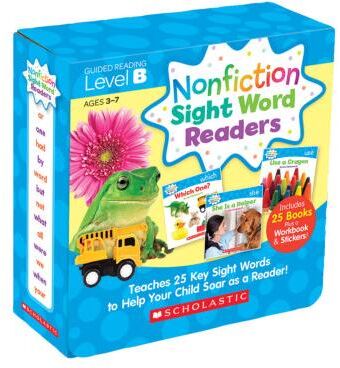
Scholastic Teaching Resources Nonfiction Sight Word Readers Parent Pack Level BParents can set the stage for their child to soar with these just-right books that teach the first 100 Fry sight words! Each box incParents can set the stage for their child to soar with these just-right books that teach the first 100 Fry sight...23,99 $*Shipping: 0,00 $Secure redirect to the provider
-
How to focus a manual lens on a gimbal?
To focus a manual lens on a gimbal, you will need to adjust the focus ring on the lens itself. Start by setting your camera to manual focus mode. Use the gimbal's controls to stabilize the camera and frame your shot. Then, carefully turn the focus ring on the lens until your subject is in sharp focus. It may take some practice to get the hang of smoothly adjusting the focus while using a gimbal, but with patience and practice, you will be able to achieve crisp, focused shots. **
-
How do you adjust the focus on a lens?
To adjust the focus on a lens, you typically rotate the focus ring on the lens barrel. Turn the ring clockwise or counterclockwise until the subject appears sharp in the viewfinder or on the camera's LCD screen. You can also use the camera's autofocus system to automatically adjust the focus by half-pressing the shutter button or using a designated autofocus button. Additionally, some lenses have a switch to toggle between autofocus and manual focus modes, allowing you to manually adjust the focus by rotating the focus ring. **
-
What is the difference between shutter speed and exposure time on a camera?
Shutter speed and exposure time are often used interchangeably, but they refer to slightly different concepts in photography. Shutter speed specifically refers to the amount of time the camera's shutter remains open to allow light to hit the camera sensor, measured in fractions of a second (e.g., 1/1000s). Exposure time, on the other hand, encompasses the total duration of time the sensor is exposed to light, including the time the shutter is open and any additional delay before or after the exposure. In practical terms, both terms are crucial in determining the amount of light that reaches the sensor and ultimately affects the brightness and sharpness of the image. **
-
What is the difference between shutter speed and exposure time in a camera?
Shutter speed and exposure time are often used interchangeably, but they actually refer to different aspects of a camera's operation. Shutter speed specifically refers to the amount of time the camera's shutter remains open to allow light to reach the camera's sensor, typically measured in fractions of a second. Exposure time, on the other hand, refers to the total duration of time that the camera's sensor is exposed to light, including both the time the shutter is open and any additional time the sensor may be active to capture the image. In essence, shutter speed is a specific aspect of exposure time, with the latter encompassing the entire duration of light exposure for a given photograph. **
* All prices are inclusive of VAT and, if applicable, plus shipping costs. The offer information is based on the details provided by the respective shop and is updated through automated processes. Real-time updates do not occur, so deviations can occur in individual cases. ** Note: Parts of this content were created by AI.